
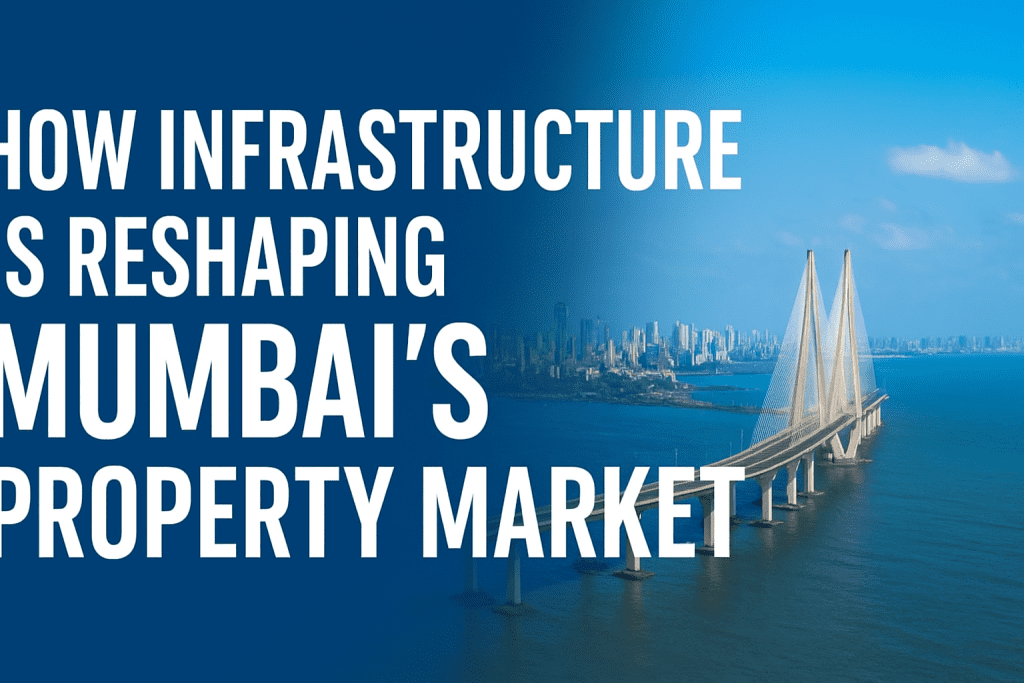
How Infrastructure Development Is Reshaping Mumbai’s Property Market
Mumbai, India’s financial capital, has always been a dynamic and fast-paced real estate market. However, in recent years, the city’s property landscape has undergone a significant transformation driven largely by unprecedented infrastructure development. Mega projects such as the Mumbai Coastal Road, the Mumbai Trans Harbour Link (MTHL), multiple new Metro corridors, expanded highways, and large-scale redevelopment initiatives have reshaped how people travel, live, and invest within the city. These developments are not just improving connectivity—they are redefining the growth pattern of Mumbai’s real estate and opening up new opportunities for homebuyers and investors.
One of the most impactful projects is the Mumbai Coastal Road, which aims to streamline travel between South Mumbai and the western suburbs. By reducing travel time and easing congestion, this project has significantly boosted the appeal of locations like Worli, Tardeo, and Mahalaxmi. Properties in South Mumbai have always been premium, but better accessibility has further strengthened demand among luxury homebuyers and NRIs. As the remaining phases of the Coastal Road near completion, industry experts expect a further surge in interest, particularly for sea-facing and high-rise developments.
Similarly, the MTHL Sea Bridge—India’s longest sea bridge—has emerged as a game changer for both Mumbai and Navi Mumbai. The connection between Sewri and Nhava Sheva has opened up a new corridor of growth, making areas such as Panvel, Ulwe, and Dronagiri more accessible to the main city. This has led to increased demand for both residential and commercial properties in Navi Mumbai, which now stands as one of the fastest-growing real estate markets in the Mumbai Metropolitan Region (MMR). With improved connectivity to the airport, JNPT port, and upcoming Navi Mumbai International Airport, the region is projected to witness significant appreciation over the coming years.
Metro development is another transformative force redefining Mumbai’s property market. The operational and upcoming Metro lines connecting Dahisar, Andheri, Bandra, BKC, Wadala, Chembur, Thane, and beyond have drastically improved last-mile connectivity. Earlier, residents had to rely heavily on road transport, leading to long commutes and traffic bottlenecks. The rapid expansion of the Metro network has reduced this burden, making daily travel smoother and more predictable. As a result, micro-markets located near Metro stations have seen notable price appreciation and increased rental demand. Areas like Ghatkopar, Andheri East, Chembur, and Powai have particularly benefited from the Metro boom, attracting both end-users and investors.
Highway upgrades and new link roads have also contributed to Mumbai’s evolving real estate dynamics. Projects like the Eastern Freeway, Santacruz-Chembur Link Road (SCLR), and Jogeshwari-Vikhroli Link Road (JVLR) have opened up better East-West connectivity, which was once a major challenge in the city. These projects have made suburban regions more accessible, prompting developers to introduce modern housing projects with improved amenities. Chembur, in particular, has emerged as a major beneficiary, witnessing a surge in residential projects catering to mid-segment and premium buyers.
Redevelopment—one of the cornerstone elements of Mumbai’s urban planning—is equally reshaping the property landscape. With thousands of old, dilapidated buildings due for redevelopment, the city is experiencing a massive upgrade in housing inventory. Modern towers equipped with safety features, lifestyle amenities, and optimized layouts are replacing outdated structures. Areas like Wadala, Dadar, Andheri, and Borivali have seen rapid redevelopment activity, attracting a new generation of homebuyers seeking comfort and convenience. Redevelopment also boosts the value of surrounding localities, increasing investor confidence in well-planned neighbourhoods.
These infrastructural advancements not only improve travel but also stimulate economic activity. Improved connectivity encourages businesses to expand into new areas, which in turn generates employment opportunities. When job creation and housing demand grow together, real estate markets experience healthy and sustainable appreciation. This trend is particularly visible in zones around BKC, Lower Parel, Powai, and the upcoming growth belt around the MTHL.
Looking ahead, Mumbai’s real estate outlook remains strong, supported by infrastructure projects slated for completion by 2030. Upcoming Metro lines, new road networks, the Coastal Road extension, and the full development of the Navi Mumbai International Airport will further strengthen regional connectivity. As these projects take shape, new growth corridors will emerge, expanding the city’s real estate footprint like never before.
In essence, Mumbai’s infrastructure boom is not just improving mobility—it is unlocking new micro-markets, boosting property values, and shaping the future of urban living. For homebuyers and investors, the next few years present exceptional opportunities as Mumbai evolves into a more connected, efficient, and vibrant global city.